
So, you sat down to run your first solo hexcrawl game because, well, you’ve always loved playing hexcrawls! Let’s say you have already started a solo game where you gathered up your supplies in town, or emptied out a cool dungeon, but now you are ready to set out and get from point A to point B. So, you busted out your good ol’ travel rules that you have used with your friends plenty of times before…
Well… clearly your next step wasn’t to just keep playing, because you are here. (Hi!) So, you might be in need of some ideas. And, you are definitely in the right place for that.
Though, to clarify — this guide is not going to give you a single travel system you can follow. There are so, so many resources that want to be your next hexcrawl bestie, and you can easily employ any combination of them in your solo game — we will link to a few of those in this article. What we will focus on instead is how to figure out what to do with travel in your solo game. If you aren’t new to roleplaying games, I imagine that’s probably why you are here anyway.
Perhaps you didn’t realize just how many resources you could adapt into your game. Or, maybe there are so many that you kind of ended up feeling overwhelmed and needed some focus. So, let’s cover some necessary basics and then take a look at ideas that are likely to improve whichever system you use in your game, followed by what aspects of your game not only can give you a pool of limitless ideas, but have them actually align with what you enjoy doing the most.
But, before we get started, per our tradition…
Solo Travel Quickstart: Figure Out Basics, Goals, & Go!
- Pick a system most familiar to you and the easiest way you can track things on a map. Don’t overthink it (unless overthinking it is precisely what you want to be doing).
- Recount what typically makes travel fun for you in games: think of your favorite sessions, or meditate a bit on a vibe you get from your favorite video game titles. Do you like finding more and more clues to guide you through the area and its inhabitants, or is it the challenge of surviving until the next day, or perhaps the chats you get to have with your companions? Try to work that in no matter your primary focus.
- Decide what to track and what to simplify: scarcity of supplies or time, hazards brought by weather or the landscape. When in doubt, what are your character’s default assumptions and behaviors?
- Decide on a tone, and focus on events that fuel it: if your tone is gritty and survivalist, you might want more environmental and combat challenges to test your hero. If it’s more about a silly party outing or a chaotic pursuit of a runaway hooligan, you might want some engaging non-combat events for your character(s) to deal with.
- Decide on a goal and define your challenges accordingly: are you in a rush to reach a destination? Track segments on a “clock”, and set different consequences for how late you can be. Are you searching for something? Prepare a breadcrumb clue sheet to fill out before you get to your destination. Are you trying not to get lost in a jungle? Perhaps you want a random chance to suddenly be in a different area of the map than you thought you were.
And that’s it! Go ahead and roll with it — whatever other resources you might need will come to you during the game.
Though, if you did want to stick around for a bit longer… Let’s discuss things in a bit more detail.
(Featured image credit: Ombremonde.)
The Basics: Preparing the Right Tools
1. Which System Do I Pick?
Now, this is the part of the discussion where we can easily steal from traditional TTRPG resources. If you just needed someone to tell you that you can do that, here it is. Do it. Go crack open your favorite system that features travel — if you speak fluent D&D 5e, then the best place might be to start there. If you aren’t sure, just go with what you know and already enjoy.
But, if you wanted some ideas or resources to lend a helping hand:
- If you are most interested in playing 5e and don’t mind a little investment, Paul Bimler’s The Solo Adventurer’s Toolbox and its sequel will go a long way for not only for figuring out Travel, but also generating any type of location (wilderness, city, dungeon — you name it) in detail, as well as any quests and encounters in it. It will also provide you with any oracles you might need and walk you through the basics of the mindset for playing.
- But, if you just want something with OSR flavor, you can find plenty of free/pay-what-you-want resources like Third Kingdom Games’s series, with Hexcrawl Basics as the starting entry. If you wanted something simple, another popular resource is BFRPG Hexcrawl Adventures, designed for the Basic Fantasy RPG, but compatible with most OSR titles.
- If you want a highly detailed all-in-one compendium and don’t mind paying for it, check out FlexTale Hexcrawl Toolkit, which comes with plenty of solo tips and quickstart suggestions.
- For something with less pages but still fully decked out for your solo OSR travels, check out the Old School Revival Solo Role-Playing Guide — of course, you can tell from the title that it will include much more than just the exploration rules.
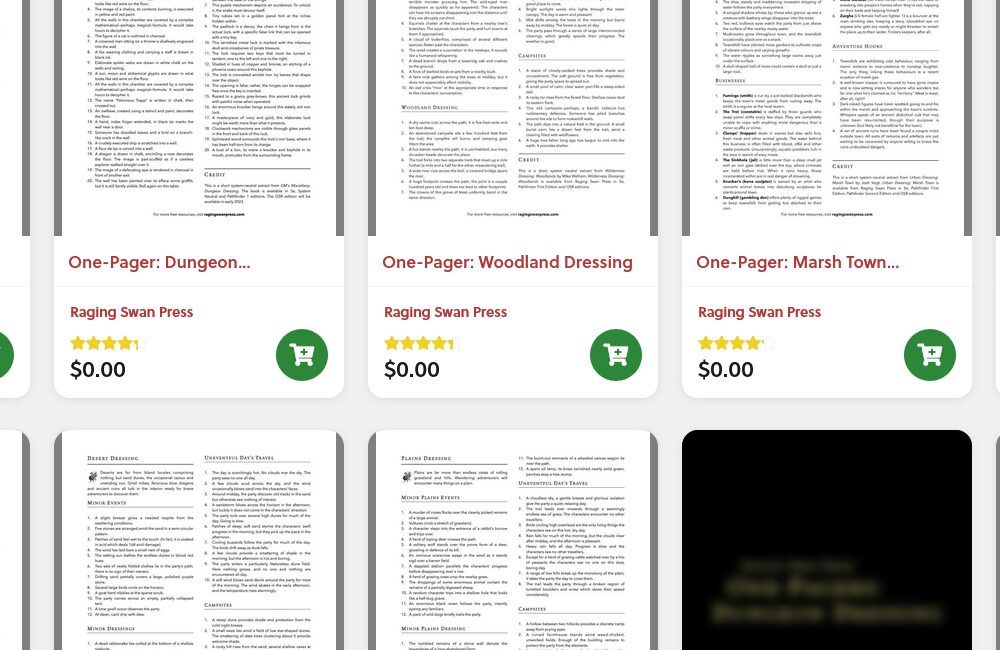
- Now, let’s say that you don’t want the traditional combat-centric experience. In that case, don’t forget that non-combat encounters are a thing: you might want to take a look at One-Page Dressing series by Raging Swan Press. You can make travel as abstract and story-fueled as you want to — don’t listen to folks who pretend like this is illegal or something.
- And, if your focus is just the narrative, you don’t really need anything dense to guide the flow — grab a generic & simple solo system like a One Page Solo Engine or Solo Roleplay Made Simple (note: solo systems, not travel systems) and start playing. You will start getting a sense of what you need as you go.
There are a lot, lot of options out there, so focus on not overwhelming yourself or giving yourself a multi-week project before you can even play… well, unless you think that will easily maintain your interest and make you even more invested in playing. (You guys scare me a little.)
2. How Do I Map Things Out?
Goodness, what can’t you do to create a map? You probably should consider what’s right for your game (which is not necessarily the same answer as it would have been if you were preparing a session as a GM, or playing a collaborative map game with friends).
How much control do you want? Perhaps you want everything randomly generated for you? Do you want to see something on the page and come up with more ideas for it?
Let’s take a look at just some of the options:
- Fully Freeform: Pen and a printout of a hex grid on paper. Photoshop and landscape brushes to use as stamps (simple demonstration in this video by Mystic Arts). An option favored by solo players is an Obsidian setup with a map of any degree of detail you can annotate, alongside any amount of windows that contain notes & reference (very effective presentation in Obsidian for RPGs by Unfolding Machines).
- Partially or Fully Assisted: A Hex editor like HexTML for a library of icons but freeform design, an app like Pocket Lands that already includes basic random generation (also comes with a PDF), Watabou’s Perilous Shores for a pre-generated map (right-click to enable and customize hexes), or something like HexRoll for a fully randomly generated and guided playing environment which you can hop into and play right away.

We mention a few more of these in our Best Free D&D Map Making Software and Tools guide.
That being said, you can easily combine the two: have a Watabou map to annotate in Obsidian, for example. Or, say, why can’t you run things with a premade map (with an adventure module, even) you tweak to your taste? Or maybe you want to make the map creation process into a game as well? (Check out this Map-making/Worldbuilding TTRPGs collection).
If you have no idea, start with something familiar and decide later. If you want options, remember that you can go with any kind of vibe and organize your game around it. Man, you can just throw dice onto a paper and draw borders around the clusters (Shieldice Studio tends to offer cool resources for stuff like this) — just pick something that gives your brain a little tingle and have fun with it.
What Are Some Good Practices for A Solo Travel Game?
Now with the basics out of the way we can finally dive into some exciting stuff.
Focus on What You Enjoy
Let’s tackle a more difficult question: what makes travel fun to begin with, anyway? Recount a favorite session from the past — did you enjoy a goose chase of trying to find some elusive person or a location in the deep jungle? Do you feel immediately motivated by a challenge of surviving with low resources and hazardous elements? Is it the conversations you had around the campfire while undertaking a long journey? Or is it the clues you discovered with every step that made a sheet of empty hexes fill out with detail and color?
Whatever little details and vibes you still carry with you from your games with friends, or even your favorite video game titles — that’s the stuff worth its weight in gold. If you can work in something you truly enjoy into your current game, no matter its main focus, you already have a very strong start.
Hexcrawl Tips & Mindset by Mystic Arts
But, hey, if you want some ideas for what tends to work, I have a bit of a suggestion for you. A small list of suggestions, even. It comes from one of my favorite videos on the topic: Why 3-mile hexes make HEXCRAWLS fun by Mystic Arts. Yeah, yeah, I know this one is primarily meant for GMs of 5th edition D&D, but who cares? The discussed mindset is fantastic for solo roleplay in just about any system as well.
To summarize the general principles:
- Employ the hexcrawl system when you explore the wilderness. When merely trying to reach a destination, on-road encounters are enough.
- Consider using a pointcrawl system instead of a hexcrawl to represent travel where your biggest interest are POIs instead of searching through a map.
- If you use 3-mile hexes, you will be able to see nearby areas before venturing into them, thereby giving yourself meaningful, informed choices to make.
- 3-mile hexes are also intuitive for travel, where you can cross a regular hex by road in 1 hour, with 2, 4, and 8 hours reserved for some traversing challenge: 2 hours to navigate hills, 4 hours travel through a forest, or 8 hours scaling mountains, for example.
- Something like this would pair well with a tool like Pocket Lands, mentioned in a previous section. Note that the app assists you with a Discovery Roll before you choose to enter an area.
- Speaking of video game inspirations: try dropping a clue into every dungeon and location that hints at other places that exist on the map (factions, quests, landmarks) alike in The Elder Scrolls V: Skyrim, designing your play like a breadcrumb trail that encourages organic exploration.
- Or, here is another one mentioned in the video: Vista points (like in Zelda: Breath of the Wild) that are strategic points to visit to reveal more of the map at once.
(Please do give my favorite Dungeon Daði a watch sometime, though.)
Ideas for Solo Play Specifically
Exploration-Focused
You can pre-design a map like this, or just its vague outline, or even drop these into your game as you go. I personally am a big fan of tracking clues to assign them to locations, people/factions, or big plot revelations. Some I track in pairs or sets of 3, and if they seem vague I can “study” them to figure out their intended meaning (think Node-Based Scenario Design by The Alexandrian). A sack of belongings, a wolf carcass, and a city tax document could point me to a villager who is trying to hide out in a cave I am investigating to evade paying their taxes, for example.
A useful general practice I learned from DM Yourself by Tom Scutt is to decide and codify some default behaviors your character has that are relevant to the adventure they set out on. You don’t have to have them all figured out from the get-go, or be unable to alter them (I personally love playing characters who change over time), but behaviors like their preferred weapon, direction of travel when all else is equal, assumptions about their survival skills, their patience searching a regular area thoroughly, traveling in stealth, etc., can speed up your game by answering a lot of basic questions and helping you “stay fair” if you happen to get a cool idea you would rather your character doesn’t know about yet.
Survival-Focused
If travel takes up a significant amount of your time in game, questions of time and supply scarcity (are you on a time limit? Do you want to care about food and clean water?), level of environmental risks (how severe can weather get? What are the risks of climbing up a mountain?), and emergency backups/fail-safes (should dice get particularly mean) are better to be figured out before you set your foot into the wilderness.
You don’t have to decide everything by yourself, though — extend this question to your character! What do they know about the area, how much can they find out, and do they care about the potential risks? Then you can say it’s their fault for not preparing better anyway.
Simplifying Things
If you aren’t a big fan of tracking every resource but you still like the survival challenge, you can combine them into a single Supply Track, Ironsworn-style, and tick that down every day or when failing more challenging rolls, encouraging foraging to keep the track replenished, and planning to avoid rolling high-difficulty rolls.
And, if you would rather just figure out the rest as you go, you can rely more heavily on the Oracle as your way to “ask your GM” any questions you have preparing for your trip, or during your travels. You can leave a couple of slots in your inventory empty and allow yourself to “flashback” early on to decide that you brought something for a challenge you could have anticipated.
Perhaps your interest is on the story, and in that case you can focus on character events and let that guide the rest of the challenge. When do you need to worry about running out of food? Well, obviously when your character makes a fool of themselves trying to chase down a rabbit and then, while catching their breath, their last ration slips out of their hand and right into the rapid river below.
We will explore these priorities and mindsets a bit further in the section below.
Biggest Question: Okay, But What Do I Do in My Game?
Yeah, that’s the thing. You read up to this point. You sit down to play, and you can’t seem to decide on a single thing in a way that feels meaningful. That’s one of the common challenges of solo play, especially when you haven’t thought through what it is you actually want to do. But, we are going to try and resolve it in this section and hopefully motivate you to start playing right away.
And, hey, this is actually where everything we’ve discussed previously comes in, to form into something special specifically for your game. Let’s have some fun with it.
Decide on a Tone and Events
Alright, let’s talk vibes. Let’s pretend your travel adventure is a movie, and you are watching a cool trailer for it. It won’t explain any of the events, but it sure is going to make you feel excited to watch it. What are the highlights chosen, what are the badass cinematic moments? Is it epic, tense, or hilarious? What’s the music playing? What happens when the track either goes silent for a beat, or when the volume builds up to a climax? (If it helps, go ahead and find the right music track and try to summon some scenes in your head.)
Again, none of this will tell you what actually happens — and, whoops, maybe the trailer maker mixed up the movies and your adventure ends up entirely different — but it will give you a sense of the theme you would like to see and what elements would be a good match for it.
- Are you undertaking a journey in Ironsworn, dirt in your teeth, your supply bag torn asunder, and your vow still a fresh wound etched into the palm of your hand? You might want more environmental challenges for your hero.
- Check out Cinematic Environs series by Critical Hit Publishing: these PDFs list out common survival considerations in any biome, and then take you through its major elements (Caves, Chasms, Cliffs, Ledges, and Rock Slide for Mountains, for example, or Avalanche, Blizzard, Ice Cliffs, Icy Crevasse, Frozen Lake, Raging River, and Tundra for the Arctic), and give you ideas for events and hazards.
- Or, maybe this is more of a buddy comedy run in Fate, two diplomats who couldn’t be more different from each other walking in awkward silence after their horse-pulled cart was derailed and tumbled down a cliff. In that case you might want some engaging non-combat events for them to deal with.
- I mentioned free entries in One-Page Dressing series by Raging Swan Press earlier in the article, but there are other options that focus on the narrative instead of the monster stats: Bits of the Wilderness series by Tabletop Adventures is one I use in almost all of my adventures, GMed or Solo. The hundreds of little description blurbs contained within are highly immersive, and come with interesting minor events to pursue.

Decide on Goals and Challenges
Next up, think about why you are traveling. Where? Do you need to search through the area, or are you merely passing through? Following a well-trodden path, or forced to chart a new one? What do your character(s) think the goal is, and could they be wrong? What are the stakes of being late or getting lost? Create challenges to make the current goals harder, and/or to reveal new goals to your adventurers.
- Are you in a rush to reach a destination? You can take an inspiration from Blades in the Dark and track your time on a multi-segment “clock“, where failure on difficult rolls might fill up the track, and you could attempt to scout out shortcuts, or forego investigating some of the map features to focus solely on gaining ground to get some of that time back. Set different consequences for how late you can be: what’s the worst that can happen? What about even worse than the worst?
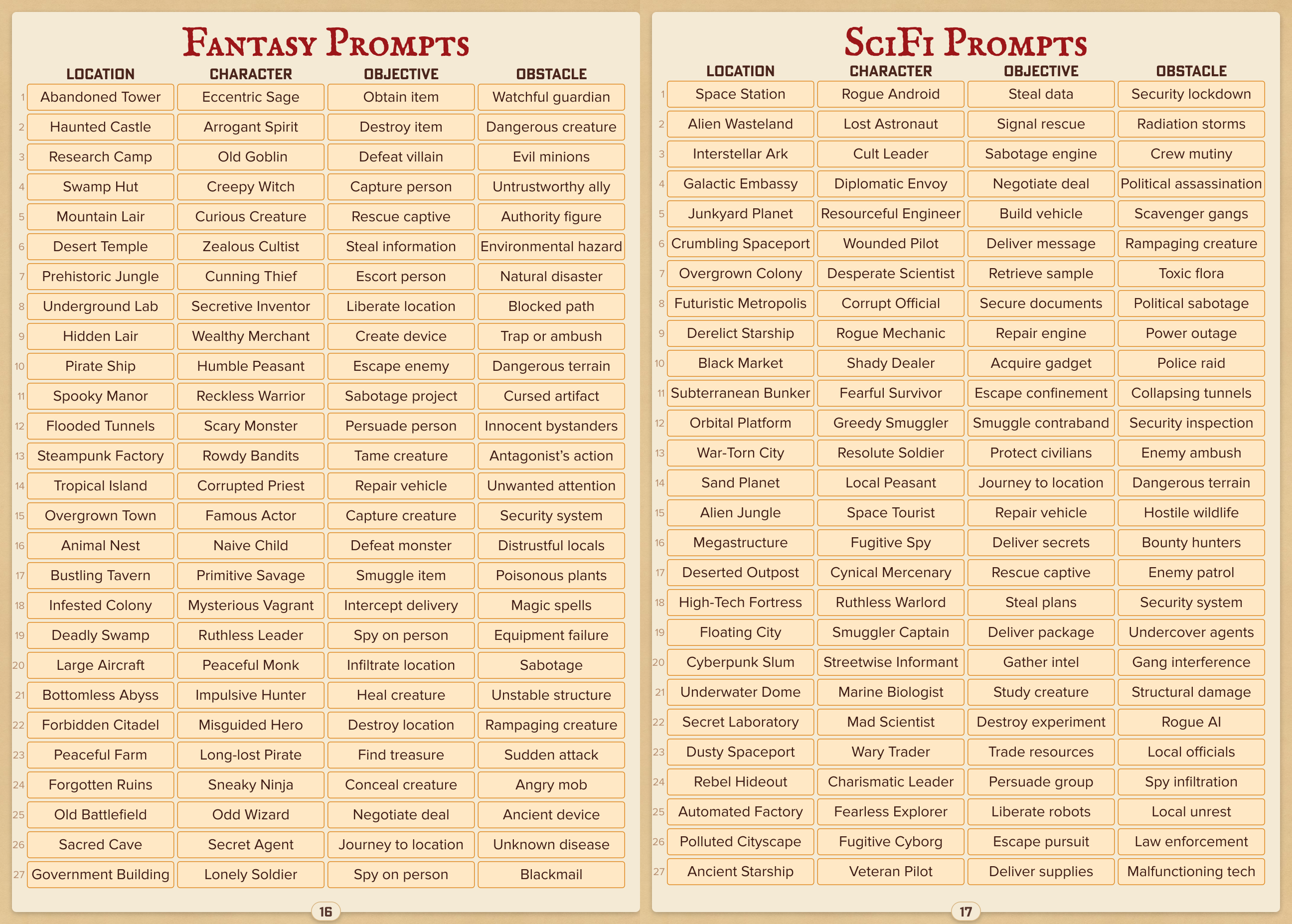
- Are you searching for something or someone? Put together a clue track and follow a breadcrumb trail throughout the area using an Oracle with lots of thematic words, like Mythic GME, the Plot Unfolding Machine, or just something like Solo Roleplay Made Simple. Do this until you have enough clues to try and make sense of where they point to. If something doesn’t fit in, perhaps you were mistaken in your initial assumptions… or, oopsie, maybe it’s just a red herring.
- Are you trying not to get lost in a dangerous jungle? You could really dive into the environmental challenges (I mentioned the Cinematic Environs series earlier) and push your character(s) to gain the skill of traversal in this particular area. What kind of a shelter works best, where to get food, and what tools can they put together with what they find? When they are still learning, have a higher chance for them to get disoriented — roll the dice to check, and place them a couple hexes/miles off from where they thought they were.
Design Play Around Your Priorities and Playstyle (as a Player)
Let’s close out on a bigger picture. We chatted a lot about the ambiguous “what do you enjoy about travel in TTRPGs?” and “what is your current game about?”, as well as a lot of character-focused challenges, but what do you see when you stand up from your chair and move a couple of steps back? … okay, yes, for a lot of us it’s just the same PC monitor but smaller, but you get the kind of picture I am trying to elicit.
- Are you seeing rows of random table and hexcrawl books, decks of event cards and little bits and pieces stolen from your favorite board games, all forming a little wall around your map at the center?
- Maybe a hardcover adventure module tome that is set on the stand right in front of your notes, a collection of system supplements stacked off to the side?
- Or, a thick story journal full of internal reflections, names of people and portrait cutouts, recalled memories, all organized under sections titled “Chapter #”?
- Maybe it’s an even thicker notebook, or multiple, filled with chaotic little notes and asides for all the exciting destinations, cities, villages, factions, cultures, and leaders, tied to a large chronology of events past and current?
In other words, what are you hoping to get out of your game?
Traveling with Favorite Sources: Travel For the Sake of Travel
If your imagination lights up every time you crack open a book full of event tables and peculiar monster blocks, then maybe your main motivation is the sense of discovery. Make completing a book full of thematically related monsters (or something that just lists them all like the Monster Alphabet) into a kind of a video game achievement for your play. Defeat them all! Or, you can do the same with a book full of events for a certain area type or biome, crossing out whatever you have already encountered.
Your goal might be to work in and explore interesting dungeons and settlements and outfit yourself with rarest items to face the most dangerous enemies of the region. Or, maybe mastering survival techniques, outfitting a robust camp, and even establishing and developing a stronghold in the area is the kind of undertaking that gets you going. Make this area your accomplishment. Something you explored through and through and can tell countless stories about.
Running an Existing Module: Travel Filling in the Blanks
On the other hand, the randomness of that kind of play might be something that turns you off. So, how about a cool campaign you never got a chance to play with your group? There are plenty of little tricks and practices to help you maintain the element of surprise outlined in books like DM Yourself, or you could search for fun little resources like an old blog once hosted by The Lone Crusader that guides you through the Lost Mine of Phandelver, step by step. (It might be tricky to find, but the blog does contain all 4 chapters of the adventure: here is the last one). You could couple this with additional resources that exist for your adventure (especially if it’s a popular module), like themed playlists or something like an Encounter Adjustment tool to ensure just the right amount of challenge.

All that’s left to do is fill in the spaces in between, one of which might be travel (which you can add even if it’s not explicitly outlined in the module), and you can reference your book for accompanying random tables to see what kind of features and monsters you could stumble upon.
Alternatively, use those as an inspiration: perhaps you just had a rough combat encounter, so rolling up Goblins on the chart feels a bit exhausting — maybe the encounter is a lost little Goblin willing to help you out if you guide them back to their parents? A traveling Goblin merchant? A hermit Goblin living in a half-buried cottage and far more interested in his beetle farm rather than any conflict with you? Will that come handy when you continue on with the main story of the module, and will that result in an ending entirely unique to your little solo campaign?
Travel in Your Narrative Campaign: Travel For the Story
I have to admit that I am biased towards this method of play, so you would have already seen plenty of examples come up throughout the article. And, as I stated before, you can easily let narrative events determine what happens mechanically. For example, I am obsessed with how my characters change as a result of their adventure.
This might be a positive change: a flawed old belief that could no longer survive in the world of your adventure, in that classic Positive Change Arc format you would have encountered in a lot of fiction. Or, maybe an idealistic character collides with the realities of life and becomes much more mature and nuanced, finally giving you that gritty “punished” arc you always craved for your character at a group table.
Apply this to your travels: what happened in this setting to put your character on their journey? Where did they go, whom did they meet, and what challenge brought them down to their knees? Put a narrative goal in front of you and slowly unravel these events to their climactic peak: add more challenging entries (physically or morally challenging!) to your random encounters and morally complex adversaries (what, you think they believe that what they are doing is evil?).
Or, what about running your game as a small group of adventurers? Perhaps a big part of your adventure is how such a group starts off with a certain opinion about each other, and then ends up in an entirely different place by the end of the campaign. Strangers to best friends, a classic. Or, maybe a duo who started off as sworn enemies but ended up as soulmates. Or, skilled warriors who thought themselves to be incompatible ending up the most powerful team in this kingdom.
In this case, the travel segment might be more about what gets thrown at the group and how they handle it. How do the survival challenges pull them closer, or stress their bond? How do the discussions they have at the evening campfire gradually change, and who might sacrifice a part of their rations to feed another? Who gets a crazy idea to address your core problem and then, even if they are laughed at for it, eventually figures out how to make it work? How do these events alter the group’s dynamic?
Travel, then, is just one part of the tale experienced by your main characters. Let encounters and survival mechanics be an outlet for the important plot beats, or let the game events happen as they do and occasionally “check in” with your group during quieter moments to see how they are affected (you can think of them as “cutscenes”, perhaps). Yet, don’t feel embarrassed if your solo sessions take on a feel of “writing with dice” at times — it’s your game. Go with the flow that feels most right to you.
Exploring a Favorite Setting: Travel to Learn and Establish
Or, maybe your main focus is not as much on your player character, as it is on the cool setting you are exploring though their eyes. Perhaps it’s a world with a unique concept you intended to eventually run a game in for your friends, or an intriguing setting compendium you have collecting dust on your shelf. Maybe you simply can’t get enough of the worldbuilding process and you don’t need a bigger reason than that.
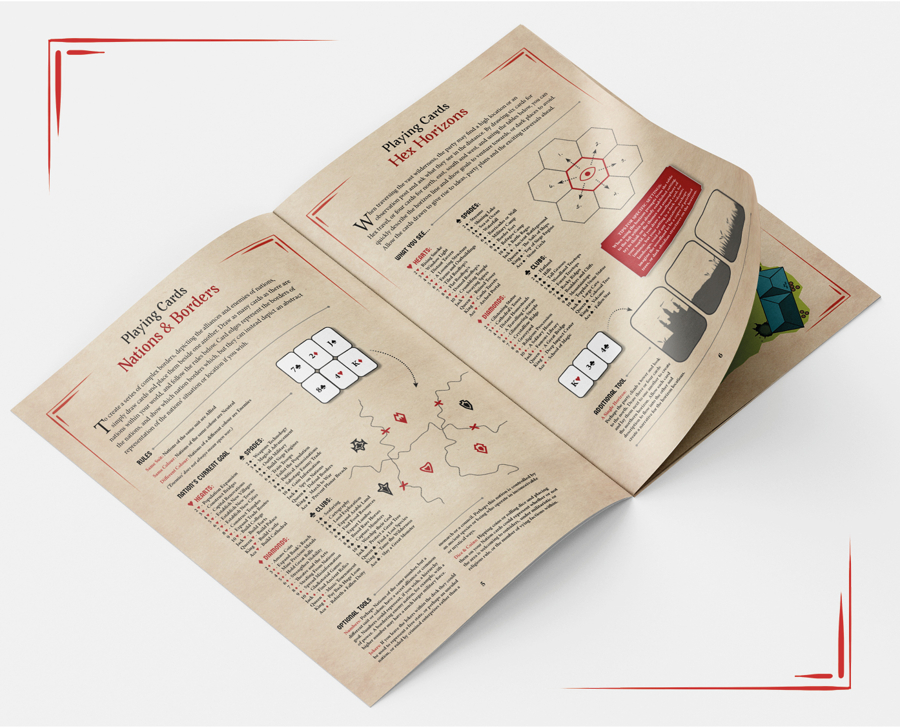
That works really well for a solo travel concept: you can chart out a course you might intend for your future players, or play out the history that leads to the main events of a campaign you are envisioning — interacting with, or even roleplaying as NPCs you want to flesh out. (Consider Lame Mage’s Microscope system as a structure for this exercise — it’s very simple and very effective at fleshing out the chronology of most important people in most important places.)
Of course, you don’t need to prepare this world for anyone else, you can just develop it for your own fun. You can zoom out a bit and use solo play to define core communities, their factions, their economies, and their leaders, as well as explore politics between these different locations — once again, I would mention Shieldice Studio for resources that streamline different parts of this process and make it extra interactive.
And, who is to say you can’t change up the formula a little bit and cut between an ensemble of important figures in your history? Perhaps these are located within the same kingdom, kind of in a The Sims Medieval style. Or, maybe you can do this in a “top-down view” (kind of like in an RTS video game), where you focus on the decisions of a specific settlement, but pay attention to how the history unfolds on the global stage and affects other nations as well (with some Crusader Kings vibes, perhaps). Maybe even work in some wargame elements back into your TTRPG, if that tickles your fancy. Why not?
I hope you found this discussion at least a bit inspiring, even if you do your own spin on the ideas you see (Good!). Travel in TTRPG games can take on many, many forms, and the possibilities only expand further when you sit down to experience this mode of play all by yourself. If you take nothing else away from the article, let it be this: don’t let your former experience or traditional formats limit what you can do at your own table. Happy soloing!